
Brian Johansen-Smith
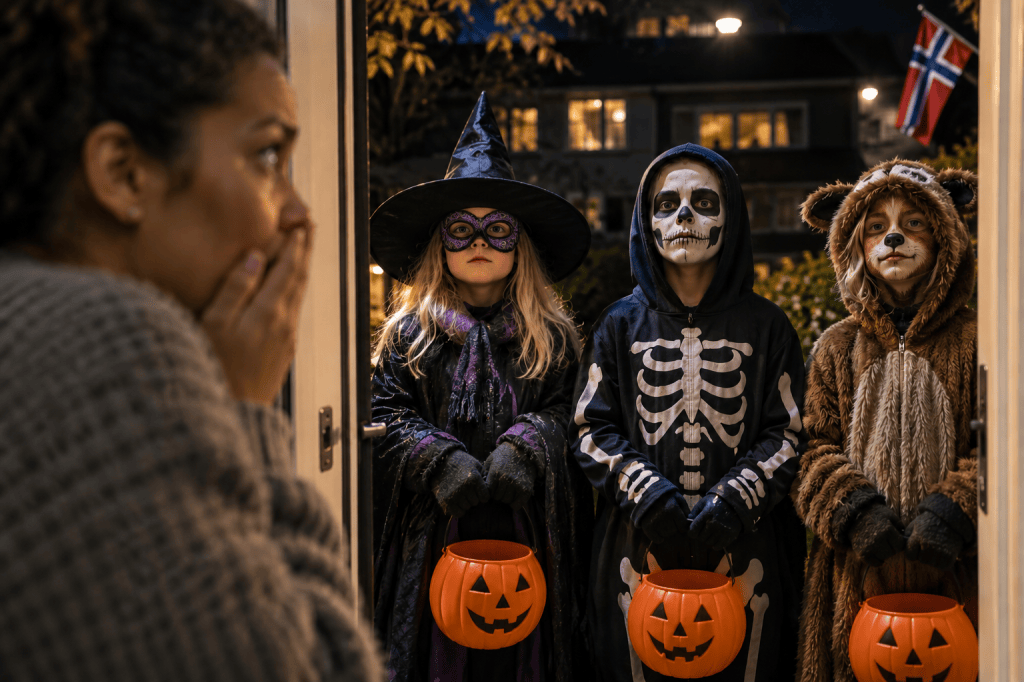
OSLO—“I see Norwegians,” Hanna whispered, her voice shaking, before shutting the blinds on the street-facing window of her townhouse.
Hanna, an American, has lived in Norway for 10 years, ever since she was romantically kidnapped by a Norwegian she met in California. She is now a citizen and has embraced nearly every part of Norwegian culture. One still frightens her: trick-or-treating.
“They ring the bell, then just stand there for 40 seconds and say nothing, with their parents waiting 50 meters away. I even say ‘knask eller knep’ for them,” Hanna said, her face going pale at the memory. “Do you know how horrifying that is for an American?”
“The first 12 seconds are the worst,” she said. “They’re completely motionless. Then comes a sudden twitch, or a blink. There’s a reason children are so effective in horror films.”
She has tried adding a dash of American spirit. It backfired.
“I told them happy Halloween and that I loved their costumes. Okay, I was as loud as a used car salesman. They screamed and ran to the next house.”
Anthropologist Dag Bladder urges patience. “Halloween only arrived in Norway in the late 1990s,” he explained, and Norwegians communicate largely by telepathy.
“They ring the bell, then just stand there for 40 seconds and say nothing, with their parents waiting 50 meters away.”
Hanna
“Verbal skills don’t fully develop until adulthood, when Norwegians learn to complain about their salary,” Bladder said. “It will take time before they are fully functional at trick-or-treating.”
Next year, Hanna plans to open the door, say nothing and simply read the trick-or-treaters’ thoughts.
“That’s full integration,” her husband told JantePosten. Not in words, but with awkward eye contact and a shy smile.

